
Thursday, December 13, 2018

Sunday, December 9, 2018
social justice event "The Hand that Feeds"
"The Hand that Feeds" was documentary about the struggles of unregistered immigrant workers who workers in New York. Since the workers are undocumented, the employers can exploit them with the threat of deportation. This gives them an excuse to pay them below minimum wage, violate workplace safety regulations, and prevent them from self-advocating in fear of being kicked out of the country. These people were told that working hard was all they needed to succeed, but as Kristof pointed out it was not enough. Since they are being refused the proper wages needed to get a better life, they are stuck in a cycle of abuse at the hand of their employer. Like in SWAAMP; since they do not have a preferred trait of being registered, they are being exploited by their employers. Johnson would have approved of us having a conversation about how these people have less privilege and advantage than we do. Even to this day see undocumented workers being exploited as this conversation still goes on regarding Trumps hiring practices. And these people this get exploited, even though it is illegal to do so.

- https://www.cnn.com/2018/12/08/politics/trump-national-golf-club-undocumented-workers/index.html
- http://time.com/4465744/donald-trump-undocumented-workers/
- https://www.workplacefairness.org/undocumented-workers
Tuesday, December 4, 2018
pecha kecha
https://docs.google.com/presentation/d/e/2PACX-1vSTC1SUlhfJxsDbfg-Oa6TmwOyKNshkUpbe8LlRe95YJyeRgzhcL0Fd-2yk284bg_2OA6gGE0OYp4oZ/pub?start=true&loop=false&delayms=15000
Sunday, December 2, 2018
Shor post
- "The difference between empowering and traditional pedagogy has to do with the positive or negative feelings students can develop for the learning process."
- In order to empower students to do well in school, we need to make it a positive experience for them. That means making sure they are comfortable with how they are being taught. If a student does not have a positive feeling about being educated, they may not value school and this can either harm or end their school experience.
- "People are naturally curious. They are born learners. Education can either develop or stifle their inclination to ask why and to learn...If the students' task is to memorize rule, and existing knowledge, without questioning the subject matter, their potential of critical thought and action will be restricted."
- Education needs to reflect people's natural curiosity, as that will only help us teach people. If we teach both the what and the why; students will be more invested in their own education.
- “Students in empowering classes should be expected to develop skills and knowledge as well as high expectations for themselves. their education. and their futures”
- By giving students a feeling of having weight and value within a classroom, they will not only see value in themselves now, but also in their futures.
Sunday, November 18, 2018
Maps Post
- Garcia: The teachers assistant speaks fluent Spanish and English. She does mix Spanish and English from time. In a school with a non-white majority this is valuable.
- Johnson: Books like "Amazing Grace" and "The Name Jar" are examples of students being taught that being different is not wrong and to not treat others differently for being different and to not feel bad about being different.
- Kliewer: A student in the class has a mental disorder and the it has been normalized to the other students. Because of this students don't judge them or make fun of them for their disability.
Sunday, November 11, 2018
kliewer/McDemont reading
- “Success in life requires an ability to form relationships with others who make up the web of community. Though many of us have a certain level of control over who we meet and interact with, none of us can come close to claiming complete control."
- This quote infers that separating kids based on disabilities is not in their best interest. When we separate based on this, we create a space for prejudice. If we are separated from these types of people at an early age it creates an idea that they need to be separated in order for things to proceed normally for both groups. We also teach that relationships with disabled people are uncommon, odd, or even out of pity.
- "Common sense allows that persons unable to handle a difficult problem can be labeled "disabled." Social analysis shows that being labeled often invites a public response that multiplies the difficulties facing the seemingly unable. Cultural analysis shows that disability refers most precisely to inadequate performances only on tasks that are arbitrarily circumscribed from daily life. disabilities are less the property of persons than they are moments in a cultural focus. Everyone in any culture is subject to being labeled and disabled."
- The idea of a disability completely impairing a person's ability to learn doesn't truly make sense on paper and in practice. It only changes the way people approach learning new things, instead of an inability to learn certain things. And blaming a student's difficulty in learning something is a cheap cop out, as more likely than not the student but rather the schools unwillingness to teach the kid properly.
- "Shayne, however, did not see Isaac, or any of her students, as defective. In her classroom, which contained 6 students clinically identified as disabled (3 with Down syndrome, including Isaac) and 10 students considered non-disabled, Shayne and her associates worked to create a context that supported all children's full participation."
- It is not okay in any context whatsoever for a teacher to rank students against each other in regards to something out of their control be it sexuality, race, or disabilities. Creating and environment where it is very clear which children have preferred traits can create room for biases to surface in adulthood. A teacher's bias and behaviors will always reflect on the students in one form or another.

Sunday, October 28, 2018
westheimer reading
- "He experienced the joys of service, but he had few opportunities for meaningful interactions through which caring relationships and understanding may develop"
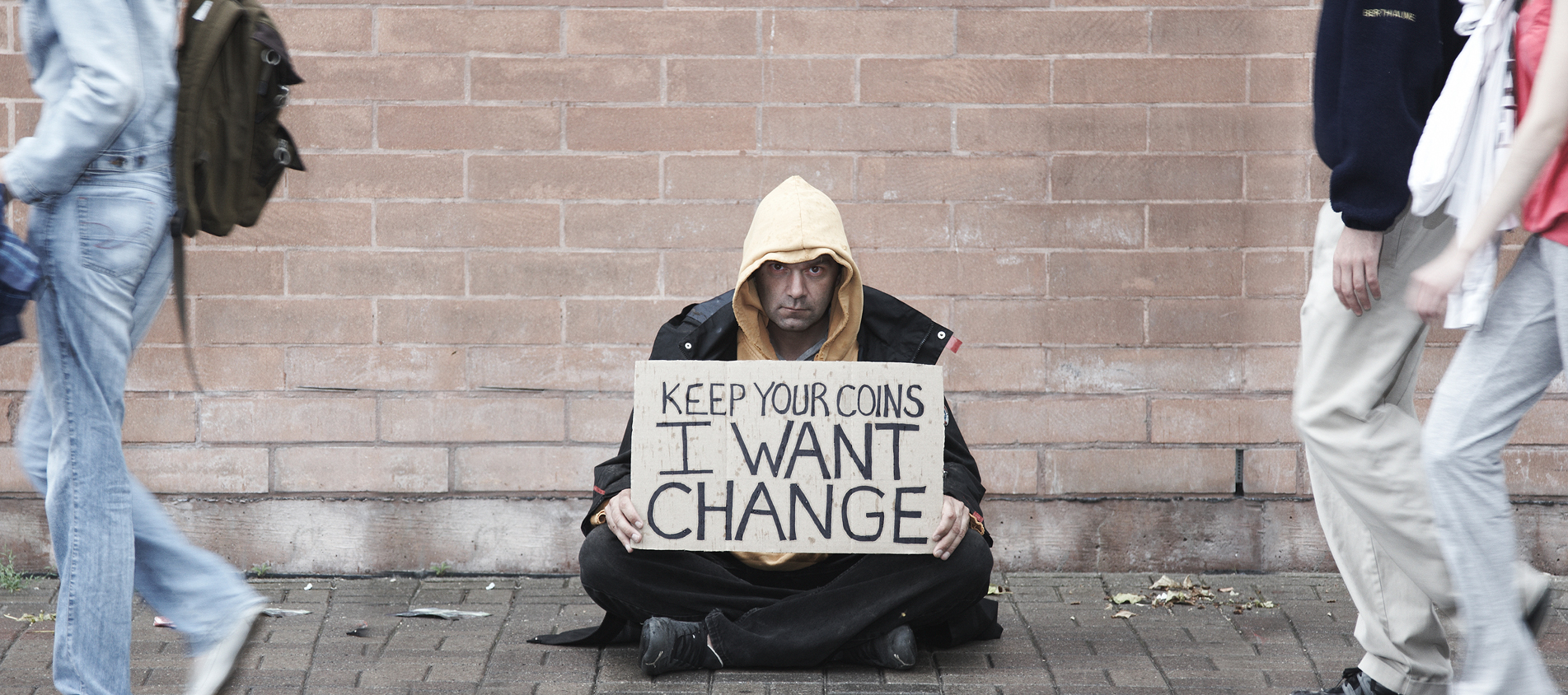
- This represents the inherent problem with certain ways we teach kids charity. In the fashion taught here, the kids only learns that homeless people need help but not necessarily how. Never in this lesson is the kid taught to communicate with the homeless or humanize them; not to mention the removal of the homeless from the conversation about helping them.
- "In contrast, much of the current discussion regarding service learning emphasizes charity, not change."
- The way the conversation should go in regards to helping homeless people shouldn't solely be about helping them with gifts or food. I am in no way saying charity does not have it's place, but we also need to consider that the situation needs to change. We need to teach kids ways to advocate for the homeless instead of just charity alone.
- "One student wrote "Everyone at the school had good manners, and I think more highly of (the neighborhood) now"."
- By getting students to go out into these communities, we can create a more human picture of the homeless. We right now characterize these people as unruly, uneducated, and lazy; but that is far from the truth. We simply need to shine a greater light on the people who actually do live in this situation.
Subscribe to:
Comments (Atom)